New Jersey Spring Yard Guide
How to Prepare Your Yard for Ticks This Spring in New Jersey
Ticks don’t wait for “tick season” to start. In New Jersey, they can become active as soon as temperatures begin to climb — hiding in leaf litter, shaded edges, and damp landscaping beds. A few smart steps now can help reduce tick pressure all season long and protect kids, pets, and the outdoor spaces you love.
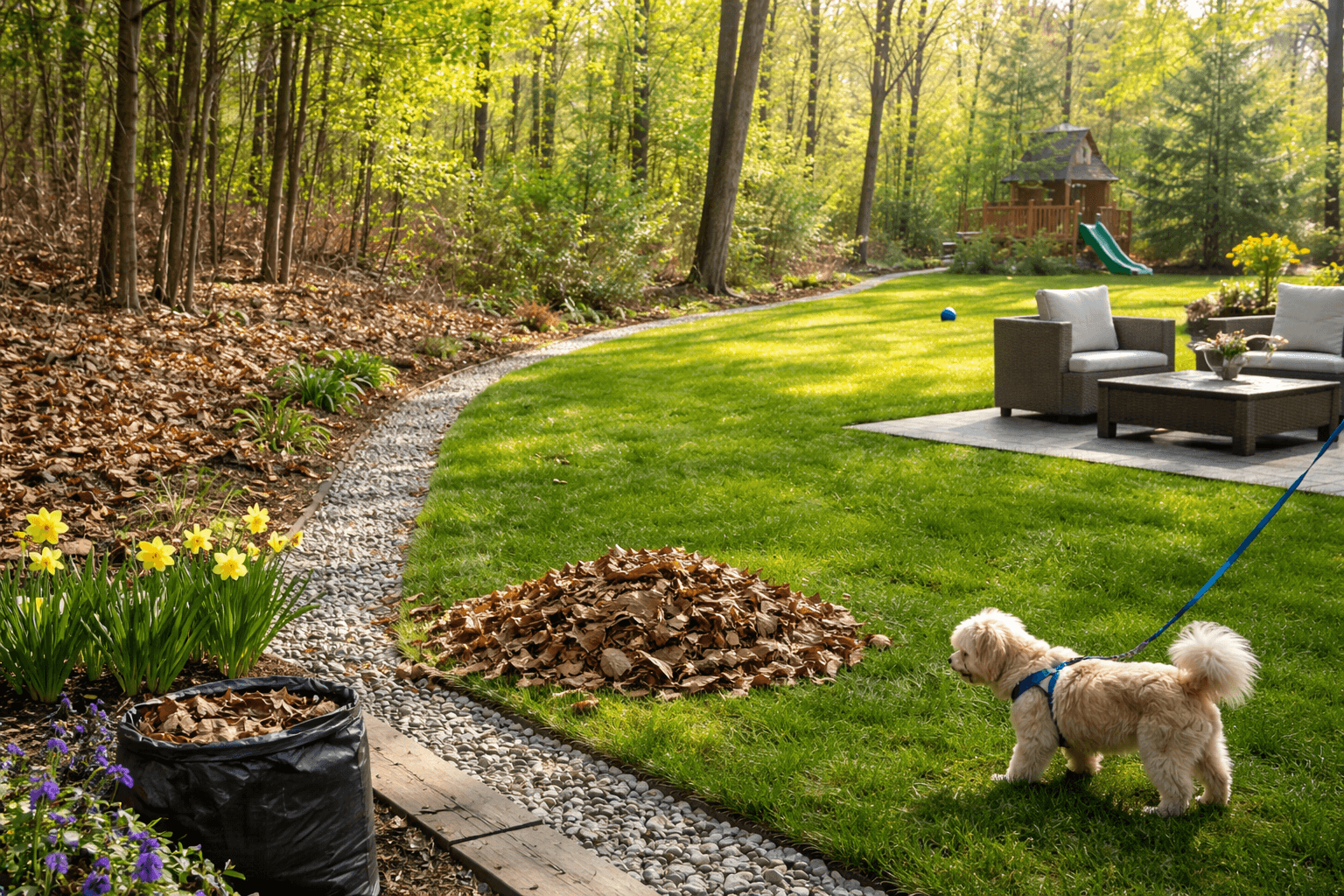
Why spring tick prep matters in New Jersey
Ticks don’t “arrive” in May — they’re already here, tucked into the places your family rarely notices: leaf litter, brush, shaded fence lines, and moist landscaping beds. As soon as temperatures trend upward, ticks become more active and spread as wildlife moves through neighborhoods.
5 high-impact steps to prepare your yard
-
Clear leaf litter and yard debris first
Rake and remove leaves along fence lines, wooded borders, under shrubs, and around foundations. Ticks love damp, protected leaf cover — removing it removes their shelter.
Tip: Focus cleanup where lawn meets shrubs, fences, and wooded borders — that’s where ticks tend to live. -
Trim back overgrowth and sunny-up shaded edges
Ticks thrive in humid, shaded areas. Prune shrubs, cut back tall grass, and improve airflow — especially along borders and behind play areas.
-
Create a buffer strip between lawn and woods
A simple strip of gravel or stone between lawn and wooded areas helps reduce tick movement into the spaces your family uses most.
-
Be smart about mulch and landscaping beds
Thick, damp mulch can hold moisture and create perfect tick hiding spots. Keep beds neat, avoid building mulch up against patios, and maintain clean edges.
-
Plan early-season protection (don’t wait for a “problem”)
The best time to treat is before tick activity explodes. Early targeting helps reduce nesting pressure at the edges — where ticks actually live.
If you do nothing else this week, do these 3 things
These are the fastest “momentum builders” — simple steps that start drying out the places ticks love and make the rest of your spring prep easier.
-
Day 1 Rake borders + remove leaf piles
Focus on fence lines, under shrubs, behind sheds, around stone walls, and where lawn meets woods.
-
Day 2 Trim back overgrowth around play + pet areas
Anything that stays damp and shaded becomes a tick comfort zone — open it up and let it dry out.
-
Day 3 Make a “tick edge map” for your yard
Walk your property and identify the edges: woods, brush, fence lines, landscaping beds, and pet paths.
The 4 “tick zones” in most New Jersey yards
Ticks are predictable. If you know where they prefer to hide, you can focus your spring efforts on the places that matter most — and stop wasting time on areas that rarely drive the problem.
Where lawn meets woods, brush, fence lines, and stone borders. This is usually the highest-pressure zone.
Thick mulch, ground cover, damp soil, and ornamental plantings that stay humid.
The paths dogs run daily — along fences, under trees, around patios, and near gates.
Playsets, swing areas, trampolines, and the “sit in the grass” spots. These should feel worry-free.
What most homeowners miss (and why ticks keep coming back)
Most people focus on the middle of the lawn. Ticks don’t. They concentrate at the borders — where shade, leaf litter, and wildlife intersect. If you want fewer ticks, your plan has to prioritize those “edge zones.”
A calmer spring for kids and pets
For most families, tick prevention isn’t a “nice-to-have.” It’s the difference between enjoying your yard and constantly checking socks, paws, and pant legs after every quick trip outside.
Simple habits that help right away
Pair yard prep with a few easy routines, and spring feels lighter — not stressful.
- Shoes-on rule for edge exploring
Especially near woods, brush, and tall landscaping.
- Quick “paws + ankles” check
Right after outside time — before settling on couches or beds.
- Keep play zones open + sunny
Ticks prefer humidity and shade — sunlight is your friend.
A simple New Jersey spring timeline
This gives homeowners a realistic rhythm — what to do first, what to maintain, and what to watch for as the season changes.
- Late winter
Clean up leaf litter, open up shaded edges, and plan your yard “edge map.” - Early spring
Refresh borders, tidy beds, and make sure play/pet zones stay dry and open. - Mid spring
Maintain edges weekly (quick trims + debris removal). Watch for wildlife traffic patterns. - Late spring
Keep pressure down with consistent yard habits so outdoor time stays comfortable.
More FAQs
Where do ticks usually come from in suburban NJ neighborhoods?
Most tick activity starts where wildlife travels: wooded borders, brush lines, fence lines, stone walls, and shaded landscaping beds. That’s why edge-zone prep is so effective.
Does mulch attract ticks?
Mulch itself isn’t the issue — it’s the moisture and cover it can hold. Thick, damp mulch in shaded areas can create ideal hiding spots. Keeping beds neat and edges clean helps a lot.
Is spring prep worth it if we already had ticks last year?
Yes. If you had ticks last year, that’s a signal your edges and shaded areas are supporting tick habitat. Early cleanup and better border maintenance helps lower pressure over time.
Want help turning these steps into a real spring plan?
If you’re tired of guessing where ticks are coming from, we can help you focus on the edge zones and the areas your family actually uses — so your yard feels comfortable again.