Do Ticks Jump or Fly? How Ticks Actually Get on You
Ticks do not leap out of trees, launch themselves across the lawn or fly toward people. Their real strategy is quieter: they wait in the right habitat, sense a passing host and climb aboard when contact occurs.

The Weekly Bite
Get 5 fresh yard-defense reads every Wednesday
Tick and mosquito intel for North Jersey yards. No spam, unsubscribe anytime.
Quick Guide: tap to open
The Quick Answer: Ticks Cannot Jump or Fly
CDC states plainly that ticks cannot fly or jump. Most human encounters happen because a person or animal brushes against vegetation, leaf litter or another surface where a tick is waiting.
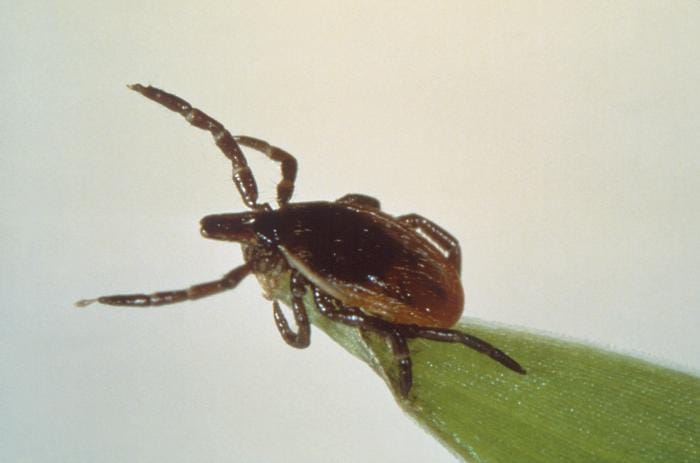
Many tick species use a behavior called questing. A tick climbs onto vegetation, holds on with its rear legs and stretches its front legs outward. When a suitable host makes contact, the tick transfers onto the host and begins crawling.
That distinction matters because prevention is less about looking overhead and more about understanding the ground-level and edge habitat where ticks actually wait.
What ‘Questing’ Really Means
Ticks are not passive specks waiting randomly. They can detect cues associated with potential hosts, including body heat, moisture, vibrations, odors and carbon dioxide. They also concentrate in places where hosts commonly travel.
Questing height varies by species and life stage. A tick does not need to be several feet off the ground to reach a person; contact with low vegetation, brush, tall grass, leaf litter or a pet can be enough.
Ticks often position themselves on the tips or edges of grasses, leaves and low vegetation where a passing host is likely to brush against them.
Ticks can respond to heat, odor, moisture, vibration and other cues. That helps them choose when and where to wait.
Once aboard, many ticks wander before attaching, which is why a careful tick check soon after exposure can matter.
A tick found on your shoulder or scalp usually climbed there after initial contact lower on the body or arrived on clothing, gear or a pet.
Where People Usually Pick Up Ticks
In New Jersey, blacklegged ticks are strongly associated with wooded habitat, forest edges, leaf litter and shaded areas. Lone star ticks also use wooded and brushy habitat and are aggressive host seekers.
Common exposure points include the edge of a trail, a brush line along a yard, leaves under shrubs, ivy and other groundcover, overgrown fence lines, wood piles and the transition between maintained lawn and woods.
The middle of a sunny, closely mowed lawn is generally less favorable habitat than a cool, humid edge. That is why Bite Back treatments focus on likely habitat instead of treating every square foot of open grass the same way.
Do Ticks Drop Out of Trees?
The idea that ticks routinely sit high in trees and drop onto people is one of the most persistent tick myths. A tick can end up on the head or neck, but that does not mean it fell from a branch.
Ticks often climb after making contact. A nymph picked up at ankle height may move under clothing or continue upward before attaching. Pets can also carry unattached ticks into a home or onto furniture.
Focusing prevention on real contact zones (low vegetation, leaf litter, brush and wooded edges) is more useful than worrying about ticks raining from trees.
How to Make Contact Less Likely
Because ticks rely on contact rather than flight, small changes in how people use a property can reduce opportunities for transfer.
If a Tick Is Crawling but Not Attached
A crawling tick has not necessarily bitten. Remove it, dispose of it appropriately and perform a full-body check because there may be more than one.
If a tick is attached, CDC recommends using fine-tipped tweezers to grasp it close to the skin and pull upward with steady, even pressure. Clean the bite area afterward.
Do not delay removal while trying to identify the species. Identification can happen after the tick is removed.
What This Biology Means for Yard Control
Understanding questing changes the way a yard should be managed. Tick control should concentrate on habitat where ticks are most likely to survive and encounter hosts, not on a simplistic idea that the whole lawn must be sprayed.
Reducing shade, excess leaf litter and overgrown edge vegetation can make parts of a yard less favorable. Professional treatment can then be directed to higher-risk zones such as wooded borders, fence lines, shaded landscaping and dense groundcover.
For a deeper property checklist, see Bite Back’s yard-maintenance guide.
A lot of people picture ticks jumping from the grass or falling out of trees. Once you understand that they usually have to make contact and climb on, prevention feels much more practical. I pay the most attention to the places where people, pets and vegetation actually meet.
Trusted Sources & Further Reading
The factual foundation for this guide includes the following public-health, university and peer-reviewed resources.
- CDC : About Ticks and Tickborne Disease: Explains questing and states that ticks cannot fly or jump.
- CDC : Where Ticks Live: Species habitat, distribution and seasonality.
- Rutgers NJ Ticks 4 Science : FAQ: New Jersey habitat and yard-risk guidance.
- CDC : Preventing Tick Bites: Personal and yard prevention guidance.
Frequently Asked Questions
Can ticks jump from grass onto you?
No. Ticks cannot jump. They usually transfer when you brush against vegetation or another surface where they are waiting.
Can ticks fly?
No. Ticks are arachnids and do not have wings. They reach hosts by crawling and by transferring during contact.
Do ticks fall out of trees?
Ticks can end up on the head or upper body, but routine exposure generally comes from ground-level and low vegetation rather than ticks intentionally dropping from trees.
What is tick questing?
Questing is a host-seeking behavior in which a tick waits on vegetation with its front legs extended so it can climb onto a passing host.
Why do ticks end up behind knees or around the waist?
After getting onto a person, ticks may crawl before attaching. Warm, protected areas and places where clothing fits closely are common attachment sites.
Where should I focus tick prevention in my yard?
Prioritize wooded edges, leaf litter, brush, dense groundcover, shaded landscaping and other transition zones where people or pets contact tick habitat.
Reduce the Places Ticks Are Most Likely to Meet Your Family
Bite Back provides targeted, all-natural tick and mosquito control for New Jersey yards. Our service focuses on the shaded edges, landscaping, fence lines, wooded borders and other areas where pest pressure develops.
No yard can be made completely tick- or mosquito-free, but habitat reduction, smart prevention and consistent seasonal treatment can make a meaningful difference.
Choose Bite Back, because what is sprayed in your yard matters.
The Weekly Bite
Get 5 fresh yard-defense reads every Wednesday
Tick and mosquito intel for North Jersey yards. No spam, unsubscribe anytime.