
Tick Control for New Jersey Yards
New Jersey sits near the top of the national list for Lyme disease cases almost every year, and the ticks that spread it do not live deep in the woods. They live at the edges of our yards: in the leaf litter under the shrubs, along the stone wall, in the first few feet of brush. If your family and your dog use the yard, you share it with ticks from April through October.
Bite Back Tick & Mosquito Control treats New Jersey yards with plant-based tick treatments designed for residential yards and applied according to label directions. No synthetic pesticides. No guessing about what was just sprayed around your home. Our technicians treat the edges, leaf litter, and shaded ground where ticks actually wait, on a steady seasonal rhythm that keeps pressure down from spring through fall. It is tick control built around tick biology, not around a spray truck schedule.
This page explains how our tick control program works, what makes it different from a conventional tick spray, and where to learn more. If you are comparing tick control companies in New Jersey, start here.
Why Ticks Take Over a Yard
A tick cannot chase you. It waits. It climbs to the tip of a grass blade or the edge of a leaf, holds on with its back legs, and reaches out with its front legs for the first warm body that brushes past. That behavior is called questing, and everything about a tick’s life runs through it.
Ticks need two things between meals: humidity and hosts. Dry air kills them, so they stay where the air stays damp. Leaf litter, ground cover, brush, and the shaded floor at the woods’ edge hold moisture all day. A sunny, open lawn is one of the few places ticks do not last long.
Hosts do the rest. Deer carry adult ticks across whole neighborhoods. White-footed mice and chipmunks feed the tiny young ticks in the leaf litter and stone walls, and mice are where young blacklegged ticks pick up the Lyme bacteria. A yard that borders woods, open space, or a deer path gets fresh ticks delivered all season.
The calendar matters too. Larvae and nymphs peak in late spring and summer. The nymphs are the dangerous ones for Lyme: about the size of a poppy seed, easy to miss on skin, and active exactly when kids and dogs live outside. Adults come back strong in the fall and stay active on mild winter days.
From the field: The stone wall is the classic tick address. It holds moisture, shelters mice, and sits right where the lawn meets the woods. Wood piles run a close second. Our technicians treat these edges first, because that is where ticks wait, and it is where families actually pick them up.
How Bite Back Tick Control Works
Here is the part most companies skip: ticks do not live in the middle of your lawn. They live around its edges, in the litter under it, and in the shade beside it. So that is where we treat.
On every visit, a Bite Back technician treats the zones ticks actually use: the band where lawn meets woods or brush, leaf litter and ground cover, stone walls, wood piles, shaded beds and fence lines, the undersides of shrubs, underneath decks, and the vegetation around patios and play areas. The open sunny lawn gets attention only where it borders these waiting zones.
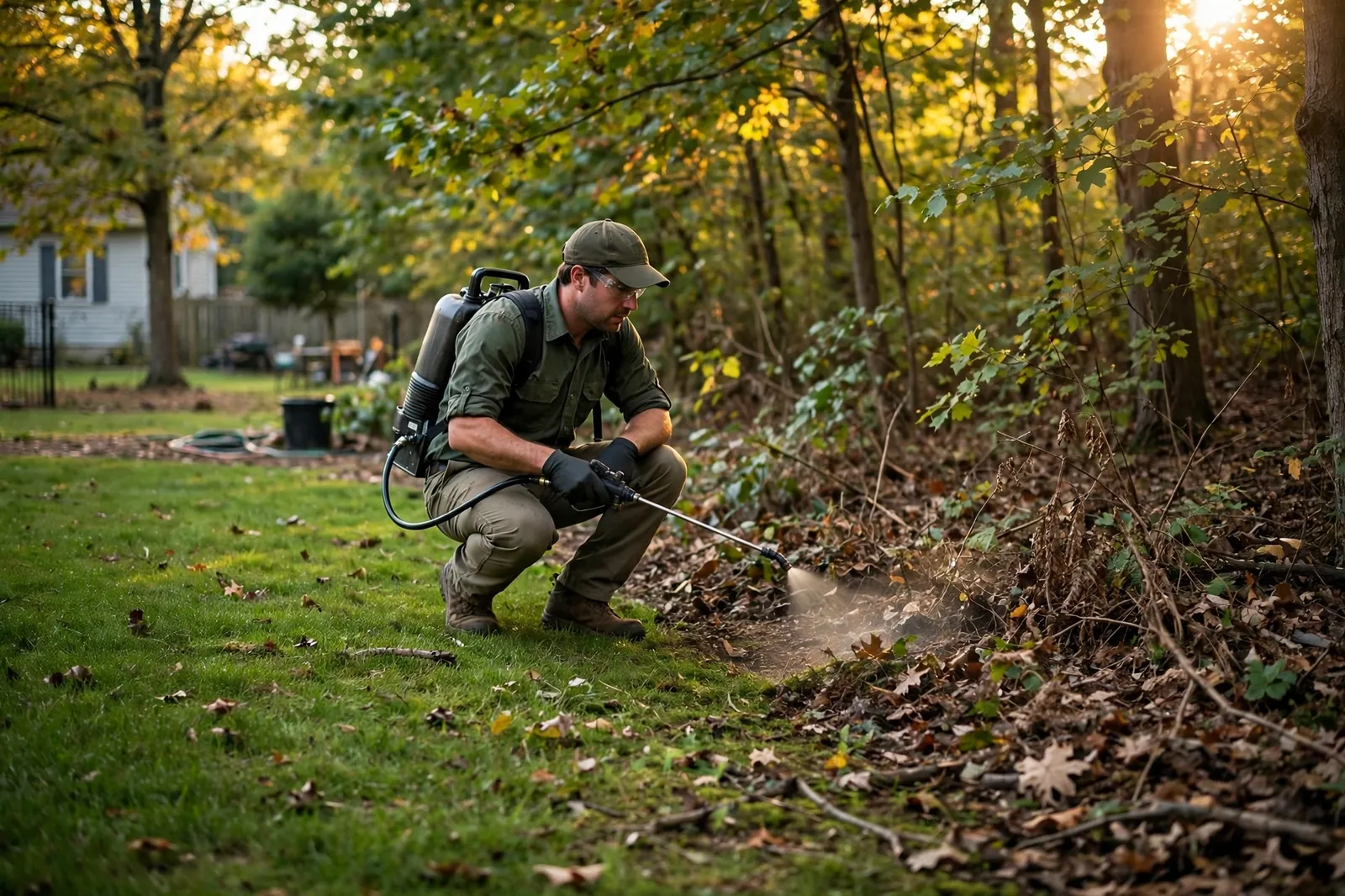
The treatment itself is a plant-based essential-oil formulation, applied as a targeted barrier spray. It knocks down ticks on contact and leaves residual protection on the vegetation and litter where they wait. Because it goes onto habitat instead of being broadcast across the yard, less product does more work.
For yards with heavier pressure, Shield Plus adds an all-natural granular barrier in the rough areas a spray cannot fully reach: deep litter, brush lines, and open or unfenced ground. The granular goes down about every 6 weeks through the season.
Visits run on roughly a 21-day cadence from April through October. That rhythm matters because ticks cycle in waves: nymphs in late spring, larvae in summer, adults again in fall. Each visit includes an inspection: the technician checks the edges, notes new growth, leaf buildup, and signs of deer and rodent activity, and adjusts the treatment to what the yard is doing now.
Across a season, the program has an arc. Spring visits get ahead of the nymph peak, when Lyme risk is highest and ticks are hardest to see. Summer visits hold the edges through the busiest months for kids and pets outside. Fall visits cover the adult surge and carry you to sustained cold.
Seasonal Plans: Shield and Shield Plus
Tick pressure rarely comes alone in New Jersey. The same shaded edges that hold ticks hold mosquitoes too. That is why Bite Back’s seasonal programs cover both, on a steady schedule from spring through fall.
Shield
A strong fit for many suburban New Jersey yards that need steady tick and mosquito support from April through October.
Best for moderate pressure, patios, play areas, pool zones, and typical residential properties.
Shield Plus
Maximum protection for properties with woods, brush lines, deer traffic, pets, shade, wet areas, or heavier tick pressure.
Includes added all-natural granular support every 6 weeks for heavier tick conditions.
Pay-as-you-go is billed after each service, and prepaying the season saves 10% on standard pricing. Not sure which plan fits? Send the quote request and we will help you choose based on your yard.
Wondering what it runs? Our guide to tick and mosquito control costs in New Jersey breaks down what drives the price, and what to compare when you line up quotes side by side.
A New Way to Control Ticks in Your Yard
Shopping for tick control usually turns into a comparison of who sprays, how often they spray, and who is cheapest. That is the wrong comparison. Two companies can visit on the same schedule and get completely different results, because results come from what is sprayed and where it is applied.
Bite Back asks you to judge the decision on those two things instead.
A plant-based essential-oil formulation with no synthetic pesticides, designed for residential yards and applied according to label directions. Families who read labels can read ours.
Directly to tick habitat. The woods edge, leaf litter, stone walls, and ground cover where ticks wait. Not a quick pass over the open grass.
Tick pressure is never constant. Technicians inspect your property on every visit, and the treatment shifts with the season: the nymph peak in spring, larvae in summer, adults in fall. New leaf buildup, fresh deer sign, a wet month: the plan responds to real conditions instead of running on autopilot.
Families who read labels. If you have ever wondered what a lawn company was spraying around your kids, your dog, or your vegetable garden, this program was built for you. Every product we use is plant-based, and we will tell you exactly what is in the tank and where it is going.
“I started Bite Back because families deserve to enjoy their yards without wondering what was just sprayed around their home.”
Choose Bite Back, because what is sprayed in your yard matters.
Ready to talk through your yard? Get a fast quote or call 732-333-3379. Tell us about your yard’s edges, woods, and deer traffic, and we will recommend the right program.
Get a Fast Quote for Your Yard
Tell us about your property and we will recommend the right tick-control program. No contracts, no pressure.
No contracts. No pressure. Just a recommendation based on your yard.
What happens next
- We review your yard details
Woods, brush lines, leaf litter, pets, kids, and deer traffic all help us understand the pressure.
- We recommend the right fit
Most customers choose Shield or Shield Plus depending on the yard and how much support it needs.
- We schedule by local route
This keeps service consistent and helps our technicians stay focused by area.
- We keep you updated
You get reminders, an on-the-way message, and service notes after treatment.
What Our Customers Say
417 five-star Google reviews from New Jersey homeowners.
Tick Control in Your County
Bite Back treats yards in 16 New Jersey counties. Choose your county for its town pages and local pricing. Searching for tick control near you? That page starts from your town. You can also browse every town we serve.
Learn More About Ticks
Short on time? These are the Bite Back resources our customers find most useful:
Tick Knowledge Center
How does professional tick control work?
A technician treats the places ticks actually wait: the edge where your lawn meets woods or brush, leaf litter, ground cover, stone walls, wood piles, and shaded beds. The plant-based spray knocks down ticks on contact and keeps working where they climb and wait for a host. Visits run about every 21 days from spring through fall, and each visit includes a check of the yard so the treatment follows the pressure.
Where do ticks hide in a yard?
Ticks need shade and humidity, so they gather where the yard stays cool and damp: leaf litter, tall grass, brush lines, wood piles, stone walls, ground cover like pachysandra and ivy, and the first few feet of woods. They rarely wait in open, sunny lawn. That edge band is where most bites happen, and it is where treatment does the most good.
How often should tick treatments be done?
About every 21 days through the season, which in New Jersey runs April through October. Ticks keep cycling all season: larvae and nymphs in spring and summer, adults in spring and again in fall. A steady rhythm keeps each new wave from building up in the places your family and pets actually walk.
When is tick season in New Jersey?
Ticks can be active any month the weather turns mild, but the main season runs April through October. The highest Lyme risk comes in late spring and early summer, when nymphs are out. Nymphs are about the size of a poppy seed, so they are easy to miss. Adults surge again in the fall.
Which New Jersey ticks carry disease?
Three species matter here. The blacklegged tick, often called the deer tick, spreads Lyme disease, anaplasmosis, and babesiosis. The lone star tick spreads ehrlichiosis and can trigger alpha-gal syndrome, an allergy to red meat. The American dog tick can spread Rocky Mountain spotted fever. Knowing which tick bit you helps your doctor, so save it if you can.
Is tick treatment safe around kids and pets?
Our treatments are plant-based essential-oil products, designed for residential yards and applied according to label directions. Safe for kids, pets & pollinators is the standard the program is built around. After a visit, follow your technician’s guidance and let the treated areas dry before everyone heads back out. Drying is typically fairly quick under normal conditions.
If my yard is treated, do I still need tick checks?
Yes. Treatment lowers the number of ticks in your yard a lot, but no program can seal a yard off. Ticks ride in on deer, dogs, and wildlife. Keep the habit: check kids and pets after time outside, especially around the ankles, waist, and hairline, and check the dog’s ears and collar line.
What attracts ticks to a yard?
Hosts and habitat. Deer carry adult ticks in from the woods. Mice and chipmunks feed the young ticks in leaf litter and stone walls. Shade, moisture, brush, and ground cover give ticks the humid shelter they need to survive between meals. Yards that border woods or open space usually carry the most pressure.
Does tick treatment also help with mosquitoes?
Yes. Bite Back programs treat for ticks and mosquitoes on the same visits. The two pests live in many of the same shaded zones, so one steady program covers both. Most New Jersey customers choose a combined seasonal plan rather than treating one pest at a time.
What is the granular treatment, and do I need it?
Granular is an added all-natural barrier we spread in the rough areas ticks love most: brush lines, leaf litter, and open or unfenced ground where a spray cannot reach everything. It is part of Shield Plus, applied about every 6 weeks. Yards with woods, heavy shade, or deer traffic benefit most. A tidy yard with a clean edge may not need it.

Ready to Get Your Yard Back?
Tell us about your property and we will recommend the right tick-control program. No contracts, no pressure.
Prefer to talk? Call 732-333-3379.
Choose Bite Back, because what is sprayed in your yard matters.