Can Ticks Live in Your House? Which Ticks Can Survive Indoors
Finding one tick indoors does not automatically mean your house is infested. The species matters. Most ticks encountered in New Jersey are outdoor ticks brought inside on people or pets, but the brown dog tick is unusually capable of completing its life cycle indoors.

The Weekly Bite
Get 5 fresh yard-defense reads every Wednesday
Tick and mosquito intel for North Jersey yards. No spam, unsubscribe anytime.
Quick Guide: tap to open
The Quick Answer: One Tick Indoors Is Not the Same as an Indoor Infestation
People and pets can carry outdoor ticks into the house. CDC specifically notes that pets can transport ticks indoors, where they may later bite people.
For blacklegged ticks and lone star ticks, an indoor finding is often a hitchhiking event rather than proof that the species is breeding throughout the home. Indoor air is generally much drier than the humid leaf-litter habitat many ticks depend on.
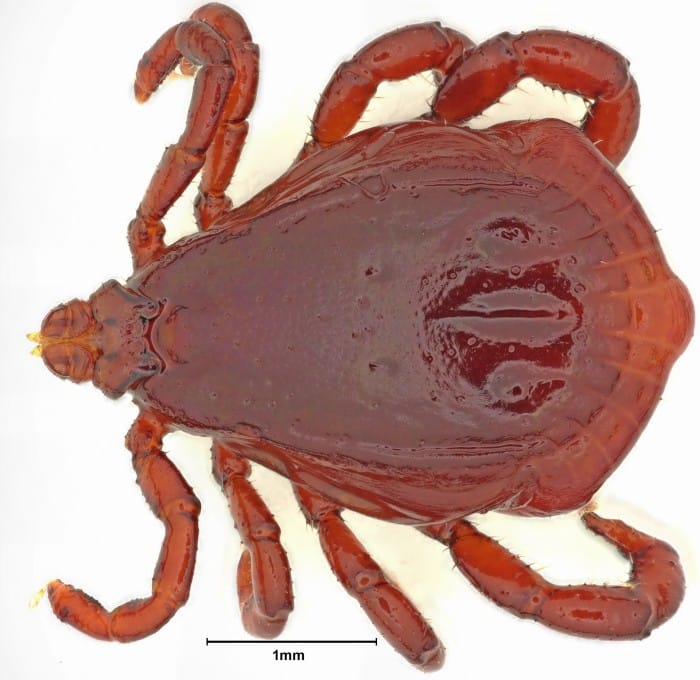
The major exception is the brown dog tick (Rhipicephalus sanguineus). CDC describes it as unique among common U.S. ticks because it can infest indoor spaces such as homes and kennels.
Which Ticks Are Most Likely to Be Found Inside?
The answer depends on how the tick got there and whether the indoor environment supports its life cycle.
Common in New Jersey’s wooded and edge habitat. It can be carried indoors on a person or pet, but it is not the classic tick responsible for persistent household infestations.
An aggressive outdoor tick that may hitchhike inside. A single indoor finding does not mean a colony is established in the house.
Often associated with grassy and brushy habitat. Dogs can carry adults indoors, but persistent indoor breeding is less characteristic than with brown dog ticks.
The important indoor exception. All life stages commonly feed on dogs, and populations can become established in homes, kennels and other structures.
Why Brown Dog Ticks Are Different
Brown dog ticks are closely tied to dogs and human structures. CDC and older vector-control guidance describe them around homes, kennels and pet bedding. In cooler regions they may be found primarily indoors.
After feeding, brown dog ticks can leave the host and crawl into cracks, crevices, baseboards, wall gaps or other protected locations to molt or lay eggs. That means controlling the dog alone may not be enough once a structural infestation is established.
If you repeatedly find ticks on walls, near baseboards, around dog bedding or in multiple life stages, identification becomes especially important.
What to Do When You Find a Tick in the House
Start with the simplest explanation and work methodically instead of assuming the worst.
Place the tick in a sealed container or clear bag if you want it identified. Photos of the top and underside can help.
A tick indoors may have arrived on a host. Check the entire body and inspect dogs carefully around ears, eyelids, collar, legs, toes and tail area.
Look at bedding, crates, baseboards and the spaces where dogs spend the most time.
One tick after hiking is different from repeated findings over days or weeks, especially ticks of different sizes or life stages.
A confirmed brown dog tick infestation may require coordinated treatment of pets and the structure. Work with a veterinarian for pet prevention and a qualified pest professional for indoor control.
Do Vacuuming and Laundry Help?
Vacuuming can remove crawling ticks and debris from floors, edges and pet areas, and washing/drying exposed clothing can help after outdoor activity. CDC recommends tumble drying dry clothing on high heat for 10 minutes to kill ticks; wet clothing may require additional drying time.
Housekeeping is useful, but a true brown dog tick infestation should not be treated as a cleaning problem alone. Hidden stages can remain in protected cracks and crevices.
Pets Are Often the Bridge Between Yard and House
Dogs encounter tick habitat at ground level and can carry attached or crawling ticks back to patios, cars and homes. CDC recommends daily tick checks for pets that spend time outdoors and veterinarian-guided preventive products.
Do not use a dog tick product on a cat unless a veterinarian says it is appropriate. CDC warns that cats are extremely sensitive to a variety of chemicals used in parasite-control products.
Reducing tick habitat outside can also lower the number of opportunities pets have to pick ticks up before they come through the door.
How to Reduce the Outdoor Supply of Ticks
Keep leaf litter and overgrown vegetation away from heavily used areas, trim dense groundcover, maintain clear transitions at wooded edges and check pets before they settle into the house.
Bite Back’s yard-maintenance guide explains the outdoor conditions that make tick encounters more likely.
If someone finds one tick inside after the dog was outside, I would not immediately assume the house is infested. What changes the picture is seeing ticks over and over, especially around the dog’s bedding or baseboards. That’s when identifying the species becomes really important.
Trusted Sources & Further Reading
The factual foundation for this guide includes the following public-health, university and peer-reviewed resources.
- CDC : Preventing Ticks on Pets: Notes that pets can bring ticks indoors and brown dog ticks can infest homes and kennels.
- CDC : Tick Lifecycles: Includes the brown dog tick lifecycle.
- CDC : Preventing Tick Bites: Clothing, body checks and prevention guidance.
- Tick Management Handbook: Connecticut Agricultural Experiment Station (CDC-funded): Background on brown dog ticks in homes and kennels.
Frequently Asked Questions
Can deer ticks live and reproduce in my house?
Blacklegged or deer ticks may be carried indoors, but they are not the tick most associated with persistent household infestations. Brown dog ticks are the important indoor-breeding exception.
Why am I finding ticks on my walls?
Repeated ticks crawling on walls or baseboards can be a sign of brown dog ticks seeking protected places to molt or lay eggs. Identification is important.
Can ticks live in carpet?
A tick can crawl across or temporarily hide in carpet, but whether a population can persist depends on the species and conditions. Brown dog ticks are much better adapted to indoor structures than common outdoor species.
Can my dog bring ticks into the house?
Yes. CDC states that pets can transport ticks indoors. Daily checks and veterinarian-guided prevention reduce that risk.
Should I spray my whole house after finding one tick?
Not automatically. First identify the tick and determine whether there is a repeated pattern. A single hitchhiker after outdoor exposure is different from a confirmed brown dog tick infestation.
Who should handle a brown dog tick infestation?
Use a veterinarian for safe pet prevention and treatment, and consider a licensed pest professional if ticks are established in the structure.
Keep Tick Pressure Outside Where It Belongs
Bite Back provides targeted, all-natural tick and mosquito control for New Jersey yards. Our service focuses on the shaded edges, landscaping, fence lines, wooded borders and other areas where pest pressure develops.
No yard can be made completely tick- or mosquito-free, but habitat reduction, smart prevention and consistent seasonal treatment can make a meaningful difference.
Choose Bite Back, because what is sprayed in your yard matters.
The Weekly Bite
Get 5 fresh yard-defense reads every Wednesday
Tick and mosquito intel for North Jersey yards. No spam, unsubscribe anytime.