Powassan Virus in New Jersey: What Deer Tick Exposure Means
Powassan virus disease is rare, but its association with blacklegged ticks makes it relevant to the Northeast. It deserves accurate context because its biology is different from Lyme disease-especially when people assume every tick pathogen requires a long attachment.

The Weekly Bite
Get 5 fresh yard-defense reads every Wednesday
Tick and mosquito intel for North Jersey yards. No spam, unsubscribe anytime.
Quick Guide, tap to open
The Quick Answer: Powassan Is Rare but Potentially Serious
Powassan virus is a tickborne flavivirus. CDC reports most U.S. cases from the Northeast and Great Lakes regions, where blacklegged ticks are widespread.
Many infected people do not develop symptoms. When illness occurs, it can range from fever and headache to severe encephalitis or meningitis.
Because there is no specific antiviral treatment or vaccine for people, prevention focuses on avoiding tick bites and finding/removing ticks promptly.
Which Tick Can Transmit Powassan?
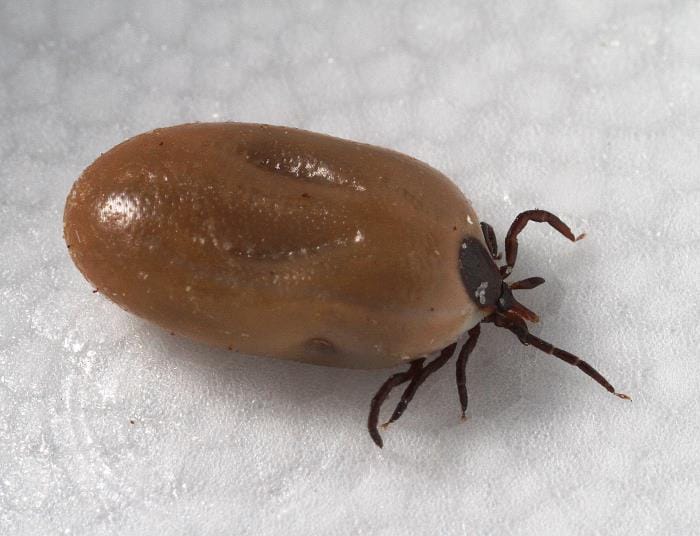
Several tick species can maintain Powassan-lineage viruses in nature. For people in the Northeast, the blacklegged tick (Ixodes scapularis) is especially important because it also bites humans and is widespread in New Jersey.
The same tick species can transmit Lyme disease, anaplasmosis and babesiosis, but that does not mean the diseases share identical transmission timing or frequency.
Powassan remains much rarer than Lyme disease.
Why Powassan Changes the Attachment-Time Conversation
Experimental research has demonstrated Powassan virus transmission much earlier during tick feeding than the typical timeframe associated with efficient Lyme transmission.
This is why a blanket statement such as ‘a tick is harmless for the first 24 hours’ is scientifically inaccurate across all tickborne pathogens.
Prompt removal is still valuable. Faster potential transmission does not mean every brief blacklegged-tick attachment causes Powassan disease; the tick would first have to be infected.
What Symptoms Can Powassan Virus Cause?
CDC lists possible initial symptoms including fever, headache, vomiting and weakness. Severe disease can involve confusion, loss of coordination, difficulty speaking, seizures, encephalitis or meningitis.
People with severe disease may require hospitalization and supportive care. Long-term neurologic problems can occur among survivors of severe neuroinvasive illness.
If significant neurologic symptoms occur after possible tick exposure, seek medical care promptly.
What Does This Mean for New Jersey?
New Jersey has established blacklegged-tick populations and documented tickborne disease activity. Powassan is not a reason to treat every New Jersey tick bite as an emergency, but it is one more reason to make tick prevention a routine habit.
Public-health risk is shaped by whether local ticks are infected, human exposure and chance. Individual homeowners cannot determine virus prevalence by looking at a tick.
State and federal surveillance data are more useful than social-media maps.
Blacklegged ticks occur statewide in New Jersey.
Powassan disease is far less common than Lyme disease.
Severe neurologic infection can occur.
The same habits that reduce Lyme exposure also reduce Powassan exposure.
How to Reduce Powassan and Other Blacklegged-Tick Exposures
Use a plant-based, essential-oil repellent when appropriate, dress in long sleeves with pants tucked into socks, avoid brushing through dense vegetation, perform full-body tick checks and shower after outdoor exposure.
Manage leaf litter and dense vegetation around high-use parts of the yard. Keep pets on veterinarian-recommended tick prevention.
Prompt tick removal matters even though it cannot provide an absolute guarantee for every pathogen.
Keep the Risk in Perspective
Rare diseases create a communication challenge. Ignoring them is not accurate, but presenting them as if they are common is also misleading.
The useful takeaway is that blacklegged ticks can carry more than one pathogen, and prevention should not be built around Lyme disease alone.
Powassan is one of those topics where I think families deserve both parts of the truth: it can be serious, and it is still rare. I don’t want to scare someone every time they find a deer tick. I do want them to understand why quick removal and year-round tick habits matter.
Trusted Sources & Further Reading
The factual foundation for this guide includes the following public-health, university and peer-reviewed resources.
- CDC, About Powassan Virus, Transmission, geography and prevention.
- CDC, Signs and Symptoms of Powassan Virus, Clinical symptoms and severe disease.
- CDC, Where Ticks Live, Blacklegged-tick distribution and pathogens.
- Rutgers NJ Ticks 4 Science, Blacklegged Tick, New Jersey vector context.
- CDC Stacks, Tick attachment and pathogen transmission review, Transmission-timing evidence including Powassan.
Frequently Asked Questions
Is Powassan virus found in New Jersey?
Powassan virus disease occurs in the Northeast, and the blacklegged tick vector is established in New Jersey. Case counts are much lower than Lyme disease.
Can deer ticks transmit Powassan virus?
Yes. Blacklegged/deer ticks can transmit Powassan virus as well as several other pathogens.
How fast can Powassan transmit?
Experimental evidence shows Powassan virus can transmit much earlier in feeding than Lyme bacteria, which is why no universal ’24-hour safe rule’ applies to all pathogens.
Does every deer tick carry Powassan virus?
No. Only infected ticks can transmit the virus, and Powassan disease remains rare.
What are severe Powassan symptoms?
Severe infection can involve encephalitis or meningitis with confusion, coordination problems, seizures, speech problems and other neurologic symptoms.
Is there a Powassan vaccine for people?
No human vaccine is currently available. Prevention focuses on avoiding tick bites and reducing exposure.
One Tick Species Can Carry More Than One Risk
Bite Back provides targeted, all-natural tick and mosquito control for New Jersey yards. Our service focuses on the shaded edges, landscaping, fence lines, wooded borders and other areas where pest pressure develops.
No yard can be made completely tick- or mosquito-free, but habitat reduction, smart prevention and consistent seasonal treatment can make a meaningful difference.
Choose Bite Back, because what is sprayed in your yard matters. 🌿
This article is educational and is not medical advice. Seek prompt medical attention for significant neurologic symptoms or other serious illness after possible tick exposure.
The Weekly Bite
Get 5 fresh yard-defense reads every Wednesday
Tick and mosquito intel for North Jersey yards. No spam, unsubscribe anytime.