
Are Toxic Mosquito & Tick Sprays On Their Way Out? Why States Are Cracking Down — And How Bite Back Keeps You Ahead
Across the country, lawmakers are waking up to a hard truth: the same chemicals used to knock down ticks and mosquitoes in backyards can also hammer bees, butterflies, aquatic life, and even kids’ play spaces. As bans and restrictions stack up, harsh pesticide programs are running out of runway — and all-natural tick and mosquito control is taking the lead.


Born in a New Jersey backyard — not a chemical lab
Bite Back started when I refused to choose between harsh pesticides and my kids playing in the yard. Instead of signing up for a drum of cheap neurotoxins, I built a mom-owned, all-natural tick and mosquito control company that actually fits how New Jersey families live.
That’s why we don’t use synthetic pyrethroids, neonics, or organophosphates in our program. Everything we do is built around natural tick and mosquito control in NJ, EPA Section 25(b) exempt products, and a process designed with kids, pets, pollinators, and ponds in mind.
1) Why states are turning on toxic yard sprays
For years, the default answer to backyard ticks and mosquitoes was simple: blast everything with a synthetic pesticide and hope for the best. The problem? Those products don’t stay where you want them — and they don’t only hit the pests you hate.
Real-world monitoring has shown that many popular lawn and landscape insecticides:
- Are highly toxic to bees, butterflies, and other pollinators.
- Can wash into streams, ponds, and groundwater after rain.
- Leave residues on grass, toys, decks, and patio furniture where kids and pets spend time.
- Can persist in lawns and soil long after the truck has left the street.
That’s why we’re seeing more movement in:
- Pollinator protection laws that restrict neonicotinoid insecticides on lawns and ornamentals.
- Rules that reclassify certain insecticides as “restricted use” — limiting who can apply them.
- Local governments that ban or limit cosmetic lawn pesticides in parks and community spaces.
2) How traditional mosquito & tick sprays put you at risk
When you hire a company that still leans on synthetic pesticides, you’re not just buying a spray — you’re buying their liability and their exposure to changing rules.
Many “backyard mosquito” programs rely on:
- Synthetic pyrethroids and similar neurotoxic chemicals for foliage and perimeter treatments.
- Organophosphate adulticides in certain mosquito-control contexts.
- “Secret blends” that market as “natural,” but contain the same actives found in hardware-store pesticides.
| Feature | Typical Chemical Tick & Mosquito Services | Bite Back All-Natural Protection |
|---|---|---|
| Active ingredients | Synthetic pyrethroids, organophosphates, “mystery blends” | Plant-based essential oils in an EPA 25(b) exempt formula |
| Impact on pollinators | Can be highly toxic to bees & butterflies, especially on blooming plants | Targeted applications designed to protect beneficial insects |
| Regulatory trend | Facing increasing bans & restrictions on lawns, turf, and ornamentals | Designed to align with minimal-risk, pollinator-friendly policy direction |
| Residues & drift | Can leave residues on grass, toys, patios, and furniture | No synthetic pesticide build-up in your yard |
| Peace of mind | “Is this really safe for my kids, dog, and garden?” | “I finally have a bite-free yard that I feel good about.” |
3) Why the future belongs to all-natural tick & mosquito control
If you’re investing in protecting your yard, do it with a service built to survive the next decade of regulations — not just the next sales flyer. All-natural programs like Bite Back’s are winning because they:
- Use minimal-risk, EPA Section 25(b) exempt ingredients that regulators already recognize as low-toxicity.
- Prioritize inspection + targeted application instead of “spray everything and hope.”
- Protect what laws are trying to protect: kids, pets, pollinators, and water.
- Deliver real reductions without leaving a synthetic chemical footprint behind.
4) What makes Bite Back different (and “regulation-proof”)
Here’s the “bulletproof” part: we built Bite Back around what’s getting protected — and what’s getting restricted. That’s why our core program doesn’t depend on the same broad-spectrum chemicals lawmakers keep targeting.
- All-natural formula: essential-oil blends (like cedarwood and rosemary) — never synthetic pyrethroids or neonics.
- EPA 25(b) exempt: minimal-risk products when used as directed.
- Pollinator-minded application: we focus on shaded, hidden zones where ticks and mosquitoes actually live.
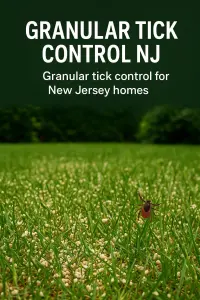
- Granular tick knock-down: in high-pressure yards, we use all-natural granules in leaf litter and soil.
- Local, mom-owned, all-in: no faceless franchise and no incentive to push the cheapest chemical drum.
5) How Bite Back protects your NJ yard without harsh pesticides
Whether you’re in the woods of Warren County, the neighborhoods of Monmouth, or busy towns across Camden and Mercer, our program is built around three pillars:
① Hyper-detailed inspection on every visit
- Wood lines, fence lines, and overgrown edges.
- Shaded landscaping, shrubs, and dense plantings.
- Play sets, dog runs, and high-traffic kid zones.
- Damp, sheltered spots where ticks and mosquitoes hide.
② Targeted essential-oil barrier spray
We apply our plant-based formula where ticks and mosquitoes live — not across your entire lawn. The goal is a protective barrier around the places your family actually uses.
③ All-natural granular protection (Platinum)
For wooded, unfenced, or high-pressure properties, our Platinum program includes an all-natural granular treatment to hit ticks in leaf litter and soil — a big part of why results feel different from DIY sprays.
Learn more about Bite Back service in your area:
- Monmouth County, NJ Tick & Mosquito Control
- Mercer County, NJ Mosquito & Tick Control
- Camden County, NJ Tick & Mosquito Control
- Hudson County, NJ Tick & Mosquito Control

6) Future-proof your yard: what to do before the next wave of bans
- Audit your current service. Ask exactly which active ingredients they use for tick and mosquito control.
- Stop the DIY “mystery jug” habit. If the label reads like a chemistry exam, it’s probably not what you want near play areas.
- Switch to a true all-natural program. Look for EPA 25(b) products and transparent ingredients.
- Choose a company aligned with where the laws are going. That’s exactly what you get with Bite Back.